.
.
.


.
.
.
I am only 12 when I become captivated by two contrasting works: Die Walküre and the Brandenburg Concertos.
I start visiting hi-fi listening rooms, and hearing Quad 57 electrostatic loudspeakers introduces me to a world alongside music: high fidelity!
.
Unable to afford the Quads, I spend three years with my first Philips / Dual system:


.
In 1981, I begin building electronics and loudspeakers from kits (Polykit, part of the MBLE group). The midrange sounds too hollow for my liking. I notice the same hollow resonance when tapping the driver… I coat it with a flexible varnish to damp that resonance. To my great surprise, the hollow quality almost disappears when listening too! Sensitivity drops slightly, admittedly, but the response becomes more linear.
This will be confirmed a few years later, once I have access to measurement systems.
I realise that sound can be tweaked, and begin looking for information.
.
In 1984, I become a member of the Audio Engineering Society and discover the wealth of research available, particularly the work of Thiele & Small:
.

It is a revelation! I devote all my time to it, including weekends and holidays!
.
In 1989, buying an exceptional turntable (a Van Bercy with a long Fidelity Research FR64 tonearm and an MC cartridge) inspires me to build a high-quality, high-sensitivity loudspeaker. After reading the research of Jean Hiraga and then Charles-Henry Delaleu, I set about building it, taking the cabinets to extremes: Onken loading, 10 cm thick sand-filled walls, internal metal bracing and different woods of different densities to balance resonances. I use drivers that were reference models at the time: a 38 cm JBL 2235H woofer, an Audax PR17 midrange and a PR130 high-frequency compression driver:
.


.
The results exceed all my expectations. This loudspeaker will remain my reference for many years.
.
In 1992, I establish my company, Pink Noise, supplying the components needed to build kits, a thriving market at the time:
Vifa, Seas, Dynaudio, Scan Speak, Eton and Thiel drivers… acoustic materials, LCR components, measurement systems…
.
In 1994, I become the importer of Intertechnik electronic components for Belgium and France.
My customers include manufacturers Jean-Marie Reynaud, Davis Acoustics, Pierre-Etienne Léon, BC Acoustique, RAM…
.

.
My role is to advise them on passive crossover design: where to use each type of component, audible differences between air-core and ferrite-core inductors, MKP and MKT capacitors, running-in times…
I also manage the production of their crossovers.
.
Looking for a high-performance measurement system, I visit Kemsonic Audio Messsysteme GmbH in Germany.
Mr Ulrich Schiller, now director of Studios 301 in Frankfurt after seven years as Managing Director of Abbey Road Institute in London, shows me the results of a TSP parameter measurement using the added-mass method.
I tell him that one of the parameters is wrong and quote the formula. He replies that nobody knows the Thiele and Small formulas by heart. His engineers examine the software and confirm the error.
I am immediately appointed distributor of their brand… whose systems I install at JMLab, for example, for quality control:
.

.
At the same time, I develop bespoke loudspeakers for importers (Nuance Esotar for Dynaudio Belgium), musicians from many backgrounds (from Renaud Patigny to two violinists from the National Orchestra), magazines (Dynaudio Eso Reference, featured in Elektor), and the CSTC, which asks me to build an omnidirectional spherical loudspeaker to study how materials affect reverberation in industrial premises.
I also work as a consultant for manufacturers including Limit, ALR Jordan and Gato, whose engineers travel from Denmark to visit me with their prototypes so that we can optimise their loudspeaker crossovers.
.
I also design monitoring loudspeakers for studios.
Below, while I am putting the finishing touches to monitoring loudspeakers for Odeon 120, the sound engineer proudly shows me his new acquisition: a magnificent Steinway & Sons concert grand piano

installed in the main room of the famous Studio Dada, founded by my childhood friend Peter Soldan:
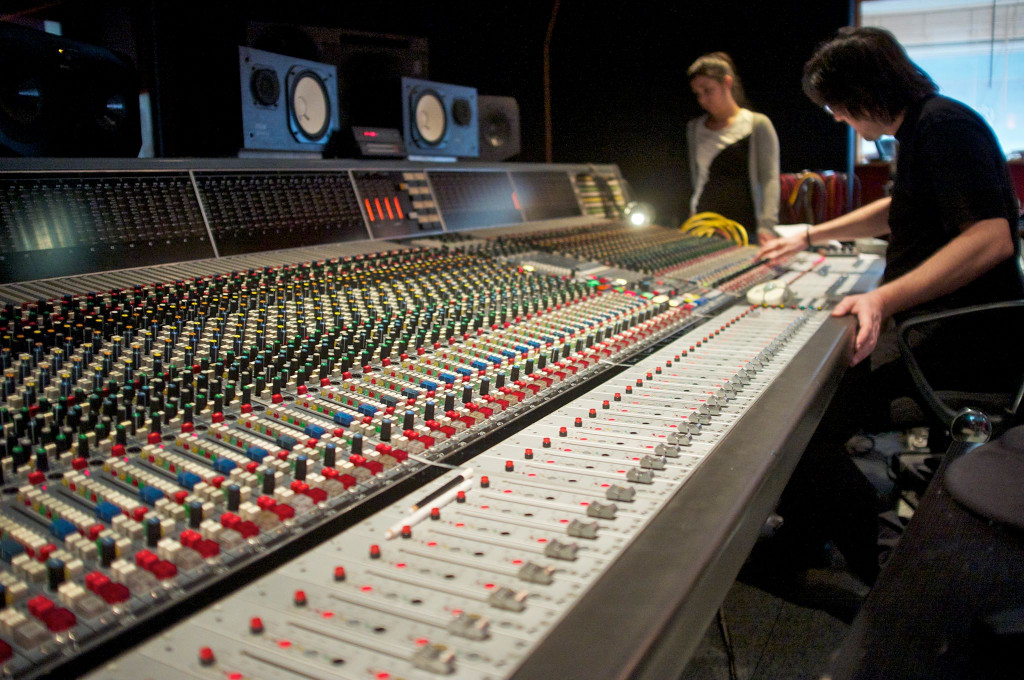
He explains the reason for this investment: William Sheller is coming for a recording session!
I therefore spend a few hours with this great artist, an experience that helps me understand the world that separates the artist from the audiophile.
With exceptional microphones (Schoeps, Brüel & Kjaer) connected through a Sonosax mixing desk, I hear my loudspeakers reproducing an instrument directly, with no processing of the recording. It is magical: I have never heard a piano sound so real.
But when William Sheller comes to hear the result, he finds it too realistic, too clean. He asks for equalisation, and the Steinway ends up sounding like a Fender Rhodes. Every artist wants a personal sonic signature, but I personally find it a pity when this comes at the expense of tonal colour.
.
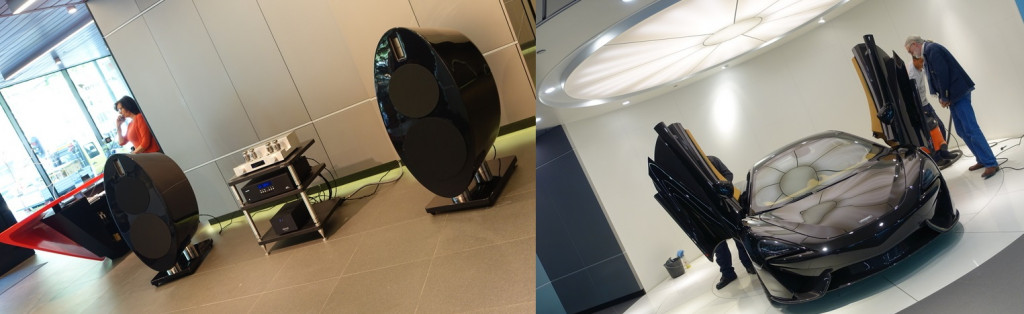
Another project: the Ovo loudspeakers designed for designer Pol Quadens, shown here at McLaren for the launch of the new 570S:
.
..
The most memorable experience is building two cinemas in Eritrea, shortly before the end of the war with Ethiopia.
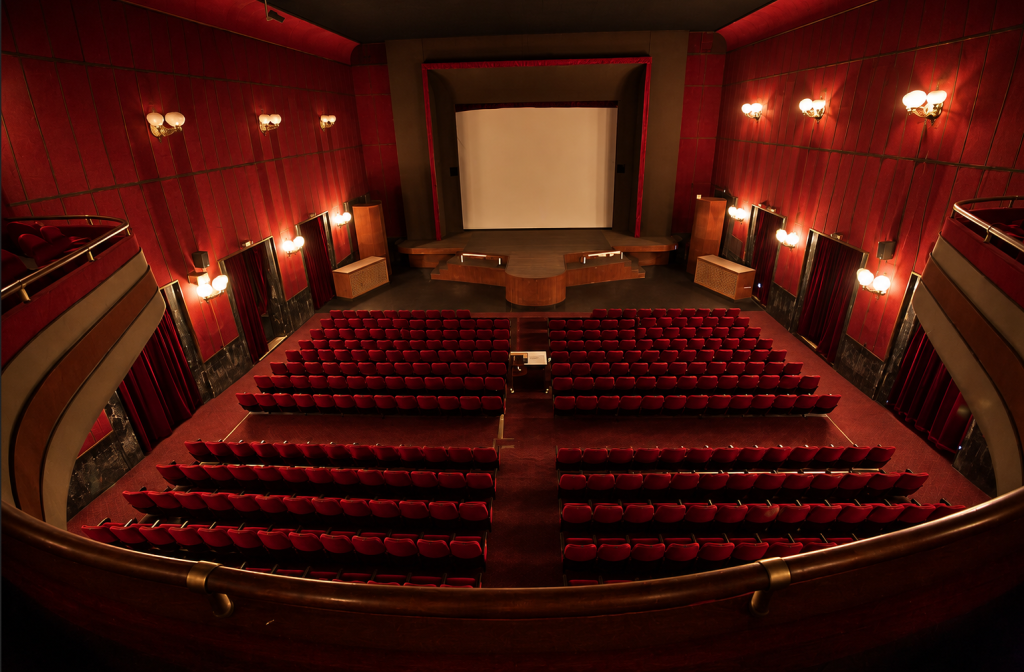
The cinema in Asmara, in the former Roma theatre, is relatively conventional:
.
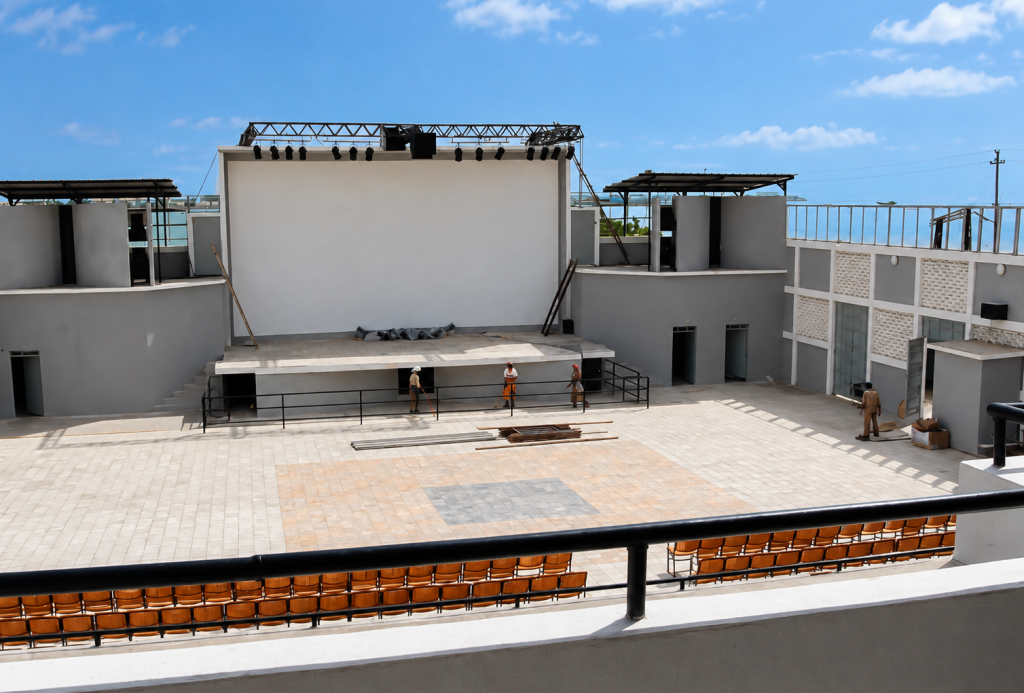
The one in Massawa, however, an open-air venue more than 50 metres long in a tropical desert climate, is a real challenge:
.
.
Since the venue has to accommodate both films and concerts, I know that conventional professional sound will not satisfy me: I want high-fidelity reproduction!
Alongside air-conditioned technical booths and sun protection for the loudspeakers, substantial power is essential. With midrange and treble compression drivers offering sensitivity above 115 dB, I have to find a way to increase bass sensitivity.
The only solution is horns: a 4-metre mouth for the 38 cm woofers, and 12 metres for the 46 cm subwoofers!
Despite this very high sensitivity, four-way active amplification totalling 15,000 watts is still needed.
There remains the question of projecting outdoors from 50 metres away onto a 15-metre screen.
After several on-site trials, Barco ultimately decides to design a projector with optics specifically for these conditions. Impressed by the overall result, Barco establishes a department specialising in venues of this kind around the world and offers me the position of director. I decline, however, with no desire to spend half my time on aeroplanes.
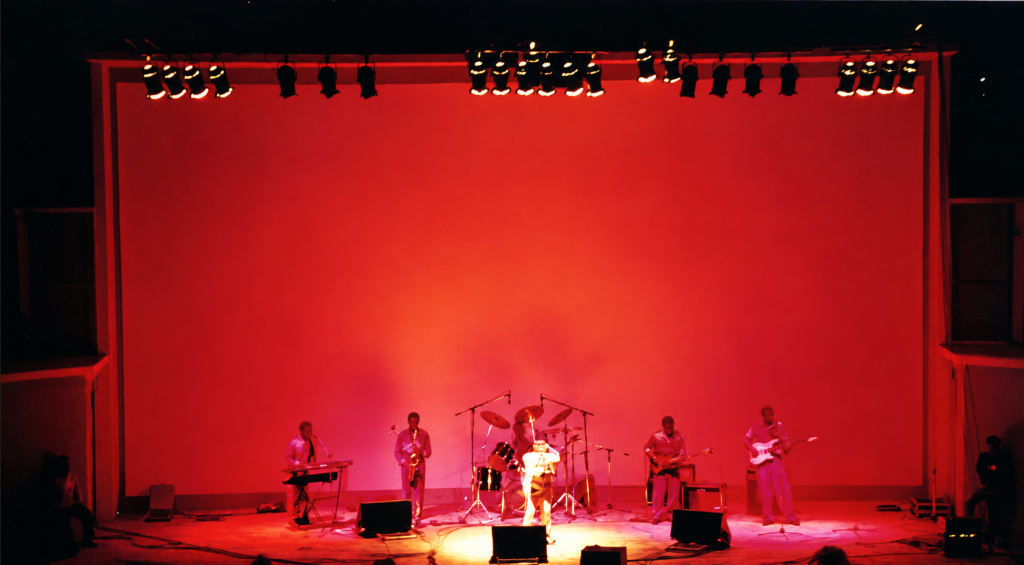
The opening, attended by the government, RAI and nearly 2,000 spectators, is unforgettable. These people have been at war since 1961, and most have never been to a cinema… The film is followed by a concert:
.
.
I subsequently become the importer of finished products from brands including Spendor, Lowther, Cayin, NVA and Harbeth.
I then begin opening, analysing and measuring dozens of high-end loudspeakers (Dunlavy, ProAc, Equation, B&W, Spendor…) to learn about—and, above all, understand—the techniques used by major manufacturers.
.
For around the past ten years, however, I have devoted all my time to traditional high fidelity.
I provide audio systems for private customers and professionals alike, including the renowned pianist Sergei Edelmann, cellist, composer and conductor Jean-Paul Dessy, and violist Romain Montfort…
.


More memorable encounters: with the Scherzi Musicali ensemble rehearsing at the back of my shop, I have been able to hear and meet musicians such as Philippe Jaroussky, and even have lunch one-to-one with Christina Pluhar!
And exceptional architects such as Claire Bataille, or Andrée Putman on the monumental Palais du Congo project, which I was fortunate enough to equip:
.


.
It is this combination of two perspectives, from the professional who analyses to the consumer who feels, that allows me today to work towards an objective, overall understanding.
.
Musically yours,
Alexandre Ley
.
.
.
.